How to Build a Daily Memory Training Routine
A daily memory training routine beats occasional marathon sessions. Learn how to build a sustainable 10–20 minute habit using active recall, spaced repetition, and brain training tools.
Amazon.com
Atomic Habits, James Clear
Atomic Habits shows how to attach a short daily practice to something you already do, so the routine survives the first week.
As an Amazon Associate I earn from qualifying purchases.
This is a habit book, not a memory-technique book. It will not teach a memory palace. Seller and price change.
Most people treat memory improvement like a crash diet — intense effort for a week, then nothing for months. They download an app, complete 50 exercises on day one, and abandon it by day four. The pattern is familiar because the approach is wrong.
Memory is a skill, not a switch. Like physical fitness, it responds to consistent daily practice, not occasional heroics. Ten minutes every morning produces more lasting improvement than two hours every other Saturday — because daily retrieval strengthens neural pathways through repetition and spacing, while sporadic sessions fight the forgetting curve without ever winning.
This guide gives you a complete framework for building a daily memory training routine you can sustain for years: what to include, how long to spend, when to train, and how to track progress without burning out.
Why Daily Training Beats Marathon Sessions
Three research-backed reasons daily practice outperforms binge studying:
- Spacing effect — distributed practice across days produces stronger retention than identical total time in one session (Cepeda et al., 2006)
- Consolidation — sleep between sessions transfers memories from hippocampus to cortex; daily practice leverages nightly consolidation
- Habit automation — daily repetition reduces willpower cost until training becomes automatic (Duhigg, 2012; Lally et al., 2010 — average 66 days to habit formation)
Brain training apps, flashcard reviews, and memory exercises all follow the same rule: consistency compounds; intensity fades.
The Four Core Components of a Memory Routine
Every effective daily memory routine includes four elements:
1. Spaced Retrieval (5–10 min)
Review flashcards or material due today. This is active recall on a spaced schedule — the highest-utility combination in learning science. Never skip due reviews.
2. New Encoding (3–5 min)
Add 3–10 new items to your system daily — vocabulary words, facts, names, or concepts from yesterday's reading. Cap additions to keep review load manageable.
3. Skill Exercise (3–5 min)
One targeted brain training exercise: number memory, word memory, spatial memory, or pattern recognition. Builds specific cognitive skills and keeps training varied.
4. Progress Log (1 min)
Record scores, recall percentages, or a simple done/not-done check. Tracking creates accountability and reveals trends over weeks.
The 10-Minute Minimum Viable Routine
For busy days, this is your non-negotiable floor:
| Minute | Activity | Tool |
|---|---|---|
| 0–6 | Review all due flashcards (retrieve before revealing) | Flashcards |
| 6–9 | One skill exercise (number or word memory test) | Number Memory or Word Memory |
| 9–10 | Log today's score | Score Tracker |
On days when you have zero motivation, do only this. Maintaining the streak matters more than duration.
The Full 20-Minute Daily Routine
When you have normal time available:
| Block | Duration | Activity |
|---|---|---|
| Warm-up | 2 min | Quick breathing + set intention for the session |
| Spaced review | 8 min | All due flashcards with strict active recall |
| New encoding | 5 min | Add and initial-review 5–10 new cards from recent learning |
| Skill rotation | 4 min | One Problemory tool (rotate daily — see weekly structure) |
| Log + close | 1 min | Record scores; note one thing that was hard today |
Sample Morning Flow
- Pour coffee. Open flashcards. Review due queue — no phone, no tabs.
- Add 5 new cards from yesterday's reading or study material.
- Complete one Visual Memory or Spatial Memory exercise.
- Log results in Score Tracker. Done before the day starts.
Weekly Structure: How to Rotate Skills
Rotate skill exercises to train different memory systems without boredom:
| Day | Skill Focus | Problemory Tool |
|---|---|---|
| Monday | Verbal memory | Word Memory Test |
| Tuesday | Numerical memory | Number Memory Test |
| Wednesday | Visual memory | Visual Memory Test |
| Thursday | Spatial memory | Spatial Memory Test |
| Friday | Pattern recognition | Pattern Memory Test |
| Saturday | Mnemonic practice | Memory Palace or Mnemonic Generator |
| Sunday | Review + audit | Score Tracker review; delete weak flashcards; plan next week |
Flashcard spaced review runs every day regardless of skill rotation.

How to Build the Habit (30-Day Plan)
Week 1: Anchor the Habit (10 min/day)
- Pick a fixed time and location (e.g., kitchen table, 7:00 AM)
- Do only the 10-minute minimum routine
- Do not increase duration even if motivated — build consistency first
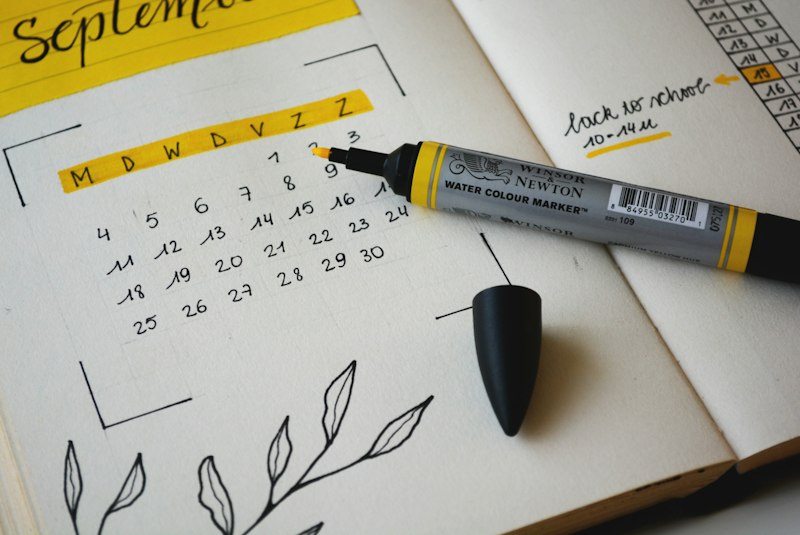
- Track streak on calendar (X for each completed day)
Week 2: Add New Encoding (12 min/day)
- Keep the same time and location
- Add 5 new flashcards daily from your current study material
- Continue skill rotation
Week 3: Expand to Full Routine (20 min/day)
- Increase to full 20-minute structure
- Introduce weekly Sunday audit (review scores, clean flashcard deck)
Week 4: Automate and Protect
- Routine should feel automatic — minimal willpower required
- Identify your top 3 disruption triggers (travel, late nights, stress) and plan minimum-viable fallbacks
- Miss a day? Never miss two. Do 5 minutes the next morning to restart the streak
Tracking Progress Without Obsessing
Track enough to see trends, not so much that tracking becomes the activity:
- Daily: recall percentage on flashcards + skill exercise score (1 minute)
- Weekly: compare average scores to previous week in Score Tracker
- Monthly: free-recall test on a fixed set of 20 cards; compare to month one
What to look for: upward trend over weeks, not day-to-day perfection. Plateaus are normal — they often precede breakthroughs when you adjust encoding quality or add interleaving.
Customize Your Routine by Goal
Exam Preparation
Increase spaced review to 15 min daily. Add 10–15 new cards per day. Skill exercises optional — prioritize retrieval of exam material.
General Memory Improvement
Follow the standard 20-minute routine. Balance flashcard review with daily skill rotation across all Problemory tools.
Language Learning
Flashcards dominate (vocabulary + grammar). Add oral production — speak answers aloud, don't just recognize written words. 15 min cards + 5 min oral.
Professional Development
Permanent SRS deck for industry knowledge. 10 min daily review non-negotiable. Weekly case-based retrieval questions.
Older Adults (Cognitive Maintenance)
Research shows memory training benefits adults and older populations (Carpenter et al., 2012). Focus on skill exercises + small flashcard sets. Social retrieval (quiz a partner) adds engagement.
Common Mistakes That Break Routines
- Starting too big — 60-minute day-one sessions guarantee burnout by day three
- No fixed time or trigger — "I'll do it sometime" means never
- All exercise, no retrieval — brain games alone don't transfer to studying without spaced flashcard review
- All retrieval, no skill variety — leads to boredom and abandonment
- Skipping after one miss — one missed day becomes a week; always restart the next morning
- Adding too many new cards — review debt kills routines within two weeks
- Chasing perfect scores — 70% recall with spacing beats 95% recall crammed once
Practical Exercises
Exercise 1: Start Tomorrow Morning (10 Minutes)
- Tonight: set out phone/laptop at your chosen training spot
- Tomorrow: 6 min flashcard review + 3 min number memory test + 1 min log
- Put an X on your calendar. Repeat for 7 days before adding anything.
Exercise 2: The Habit Stack
Attach memory training to an existing habit: "After I pour my morning coffee, I do my 10-minute memory routine." Habit stacking (Clear, 2018) increases adherence dramatically.
Exercise 3: Problemory Full-Stack Week
Follow the weekly rotation table above for 7 days. Log every score in Score Tracker. On Sunday, compare Day 1 vs. Day 7 scores across all tools.
FAQ
How long should a daily memory training routine be?
10 minutes minimum on busy days; 20 minutes for a full routine. Consistency matters more than duration — daily 10-minute sessions outperform weekly 2-hour sessions.
What should a daily memory routine include?
Four components: spaced flashcard retrieval (active recall), a small number of new cards encoded, one skill-based brain training exercise, and a brief progress log.
When is the best time to train memory?
Morning works best for most people — before distractions accumulate and when post-sleep consolidation can be leveraged. But the best time is whichever you will do consistently every day.
Do brain training games actually improve memory?
They improve performance on the specific tasks practiced. For transferable memory improvement, combine skill exercises with spaced retrieval of real study material — not games alone.
How long until I see improvement?
Most people notice better recall within 2–3 weeks of daily practice. Measurable score improvements on memory exercises often appear within 7–10 days. Long-term retention gains require 30+ days of spaced review.
What if I miss a day?
Never miss two. Do the 5-minute minimum the next morning. One missed day has negligible impact; a broken routine has major impact.
Key Takeaways
- Daily 10–20 minute routines beat occasional marathon sessions — spacing and habit formation compound
- Four components: spaced retrieval, new encoding, skill exercise, progress log
- Minimum viable routine: 6 min flashcards + 3 min skill test + 1 min log
- Rotate skill exercises weekly; flashcard review runs every day without exception
- Build the habit over 30 days — start small, anchor to a fixed time, never miss two days
- Track weekly trends, not daily perfection
- Combine brain training tools with spaced active recall for transferable improvement
Conclusion
A daily memory training routine is not about finding more time — it is about protecting ten minutes and showing up every single day. Anchor it to your morning, stack it on an existing habit, and treat due flashcard reviews as non-negotiable as brushing your teeth. The students, professionals, and lifelong learners with the strongest memories are not the ones who study hardest — they are the ones who never stop.
Ready to start your routine? Log your first session in our Score Tracker and begin your streak today.
Ready to Try Score Tracker?
Put your knowledge into practice with our interactive score tracker.
Start TrainingRelated Articles
The Science of Long-Term Memory: How Your Brain Stores Knowledge for Life
How does long-term memory work? Explore the neuroscience of encoding, consolidation, and retrieval — and learn evidence-based methods to build durable memories that last years.
Read MoreWorking Memory vs Long-Term Memory: Key Differences Explained
Working memory and long-term memory serve different roles in learning. Understand the differences, how they interact, and how to move information from one to the other effectively.
Read MoreHow to Improve Memory Naturally: Evidence-Based Methods That Work
Improve memory naturally without pills or gimmicks. Learn science-backed lifestyle habits, study techniques, and daily practices that strengthen recall, focus, and long-term retention.
Read More